
On May 30, educators, caregivers, and nature enthusiasts came together for BY5's Nature & Outdoor Learning Workshop, sponsored by Ivy Tech Community College Muncie. It was a day filled with exploration, creativity, curiosity, and play as participants discovered practical ways to strengthen children's connections with the natural world.
Led by Erica Oliver of the Ball State Field Station & Environmental Education Center alongside BY5's Emma Dragoo, the workshop centered on the Growing Up WILD curriculum and the countless opportunities that emerge when we begin to see nature as a classroom without walls.
There's No Bad Weather...
One phrase echoed throughout the day:
"There's no bad weather, only bad clothing choices."
While shared with a smile, the saying sparked meaningful conversations about what it truly takes to make outdoor learning a regular part of children's lives. Rather than viewing weather as a barrier, participants explored how thoughtful planning, appropriate clothing, and flexible expectations can create opportunities for year-round exploration.
The discussion challenged us to rethink the question from "Should we go outside?" to "How can we prepare to make this experience successful?"
The Benefits of Learning Beyond Four Walls
Outdoor learning offers children far more than fresh air. Time spent outside supports the development of confidence, creativity, curiosity, self-regulation, risk-assessment skills, gross motor development, and a lifelong appreciation for the natural world.
Nature invites children to move, wonder, investigate, imagine, and connect in ways that are difficult to recreate indoors. Every stick becomes a tool, every puddle an experiment, every fallen leaf an invitation to ask questions.
Perhaps most importantly, outdoor environments encourage children to become active participants in their own learning.
Nature Is Everywhere
One of the workshop's most encouraging conversations focused on accessibility.
Meaningful outdoor learning doesn't require acres of forest or a dedicated nature preserve. Whether a program has access to wooded trails, a small patch of grass, a playground, or even a parking lot, meaningful experiences are still possible.
Children can observe seasonal changes, investigate insects, collect natural materials, notice weather patterns, or simply sit quietly and listen.
Sometimes the most powerful question isn't, "What are we missing?" but rather, "What possibilities already exist here?"
Teaching Stewardship Through Wonder
Children are naturally fascinated by insects and other living creatures. That curiosity, however, can sometimes be accompanied by fear—or even the impulse to squash what they don't understand.
Participants discussed how educators can shift children's perspectives through observation and wonder instead of fear.
Questions like:
What do you think this worm does all day?
How might this beetle help our garden?
Why do you think this insect lives here?
help children recognize that every living thing has an important role within its ecosystem. These conversations nurture empathy, respect, and environmental stewardship from an early age.
The Value of Being Bored
In today's fast-paced world, children are often surrounded by constant stimulation. Outdoor environments offer something increasingly rare: the opportunity to slow down.
Boredom outside isn't something to avoid—it is often where creativity begins.
Given time and space, children invent games, solve problems, build imaginary worlds, and discover interests they may never have uncovered through structured activities alone.
The workshop reminded us that some of the richest learning happens when adults step back and allow children the freedom to explore.
Reframing Barriers into Opportunities
Throughout the day, participants challenged themselves to rethink common obstacles to outdoor learning.
Instead of asking:
It's too cold…
we asked:
How can we better support layering and weather preparation?
Instead of worrying about muddy clothes, we discussed how to normalize dirt as evidence of meaningful play and exploration.
And when access to outdoor gear is limited, we considered how schools, childcare programs, and communities can work together to ensure every child has the opportunity to experience nature.
The Power of Wondering
One of the workshop's most practical takeaways was the importance of shifting our language.
Rather than rushing to provide answers, educators practiced replacing statements with questions that encourage deeper thinking.
For example:
Instead of "What color is this leaf?" ask "What do you notice about this leaf?"
Instead of "Be careful!" ask "What's your plan for getting across?"
Instead of "That's a bird's nest." ask "Who do you think might live there?"
These small changes empower children to become observers, thinkers, and problem-solvers while building confidence in their own ideas and discoveries.
Learning Through Play
Of course, no BY5 workshop would be complete without hands-on experiences.
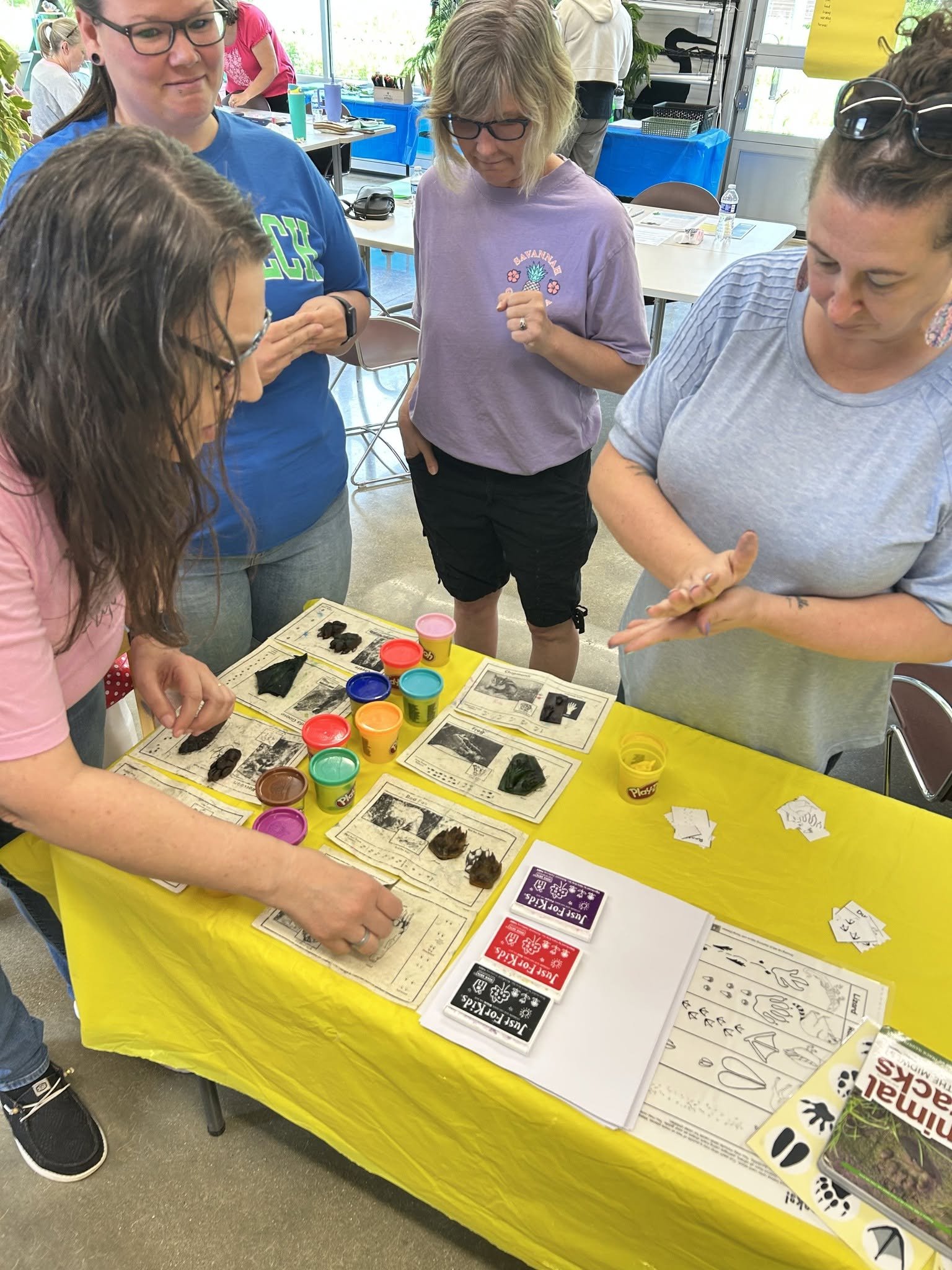
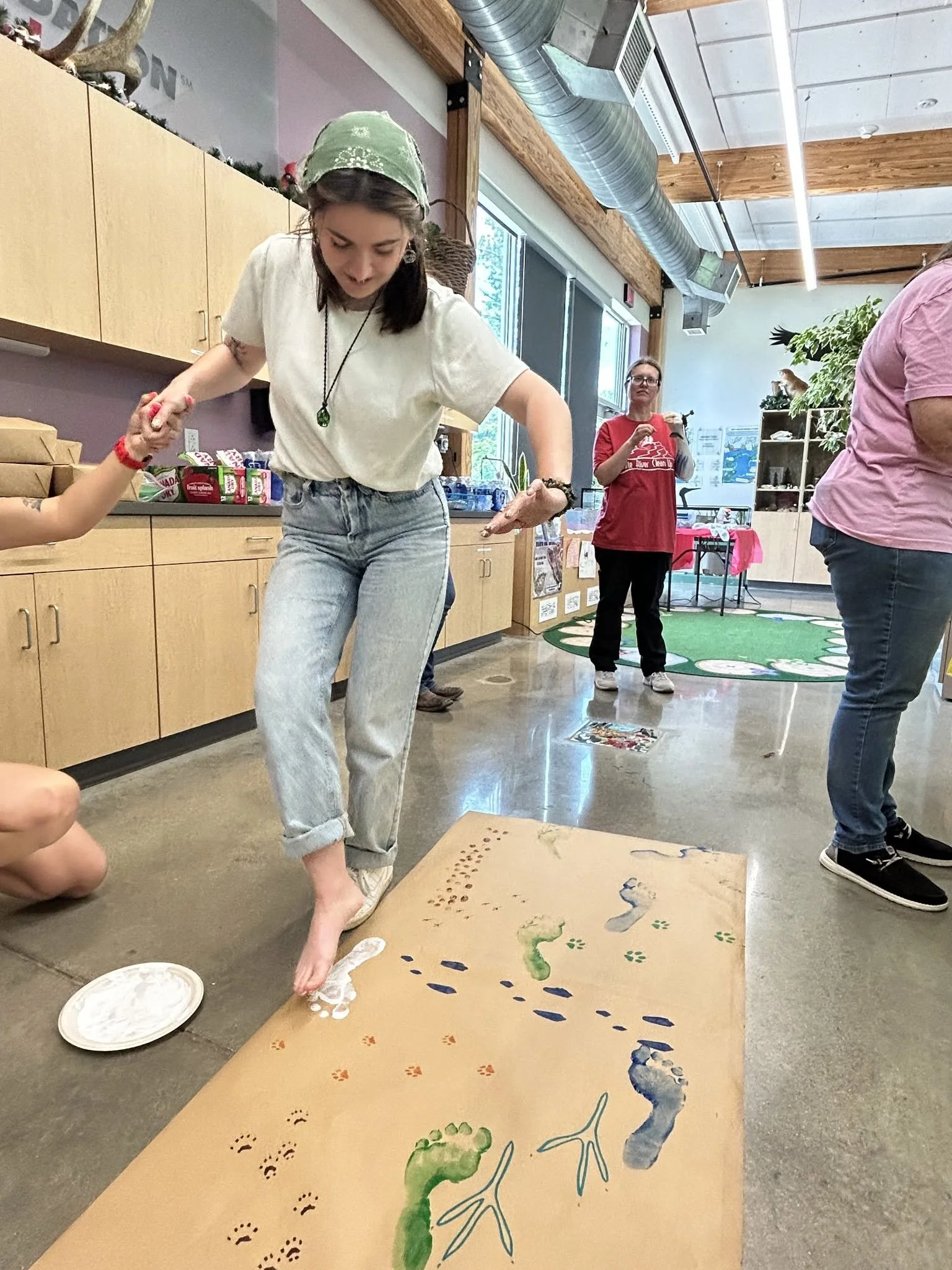
Participants created human tracks, designed bird sock puppets, experimented with watercolor and collage activities, and explored many of the engaging lessons included in the Growing Up WILD curriculum.
The room was filled with laughter, collaboration, and joyful learning—the same experiences we hope every child has the opportunity to enjoy outdoors.
Looking Ahead
As the workshop came to a close, participants left with renewed inspiration and practical ideas they could immediately bring back to their classrooms, childcare programs, and homes.
Nature-based learning doesn't require perfect weather, expensive materials, or elaborate outdoor spaces.
It begins with curiosity.
It grows through exploration.
And it flourishes when adults are willing to slow down, ask thoughtful questions, and see the world through a child's eyes.
Thank you to everyone who joined us for this special day of learning. We are grateful to Ivy Tech Community College Muncie for sponsoring this opportunity and to Erica Oliver for sharing her expertise and passion for environmental education.
The greatest classroom may not always be inside four walls.
Sometimes, the most meaningful learning is waiting just outside the door.