
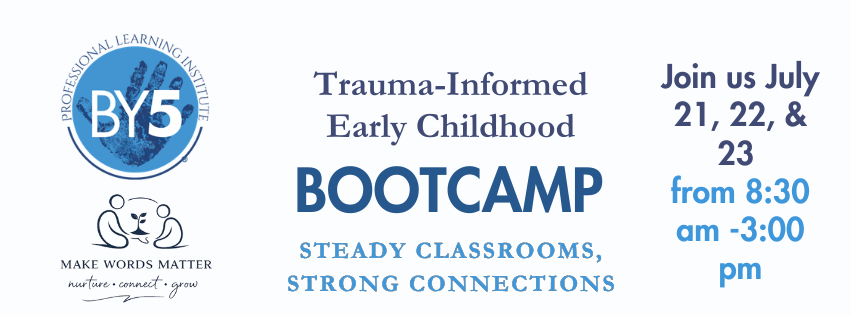
Join us for an engaging, hands-on Early Childhood Teacher Bootcamp designed to help educators build safe, connected, and emotionally responsive classrooms through a trauma-informed lens.
Across three days, participants will explore practical strategies to better understand behavior, strengthen adult-child relationships, and communicate with clarity and confidence—even during the most challenging moments. Grounded in current research and real-world classroom experience, this bootcamp helps educators move beyond compliance-based approaches toward connection, regulation, and skill-building.
Participants will actively engage in:
Guided partner activities to strengthen co-teacher communication and consistency
Role-play scenarios to practice trauma-informed conversations with families
Real-life case studies to apply Developmentally Appropriate Practice (DAP) through a regulation-focused lens
Reflective exercises to recognize how stress (in both adults and children) shapes behavior and communication
This experience goes far beyond a traditional “sit-and-get” training. Educators will leave with clear language shifts, practical tools, and repeatable strategies they can implement immediately—while also gaining a deeper understanding of how their own stress responses impact the classroom environment.
Together, we will focus on creating classrooms where:
Children feel safe, seen, and supported
Adults communicate with intention and clarity
Challenging behavior is understood—not just managed
Whether you are new to early childhood or a seasoned educator, this bootcamp will equip you with trauma-informed strategies that are realistic, sustainable, and effective.
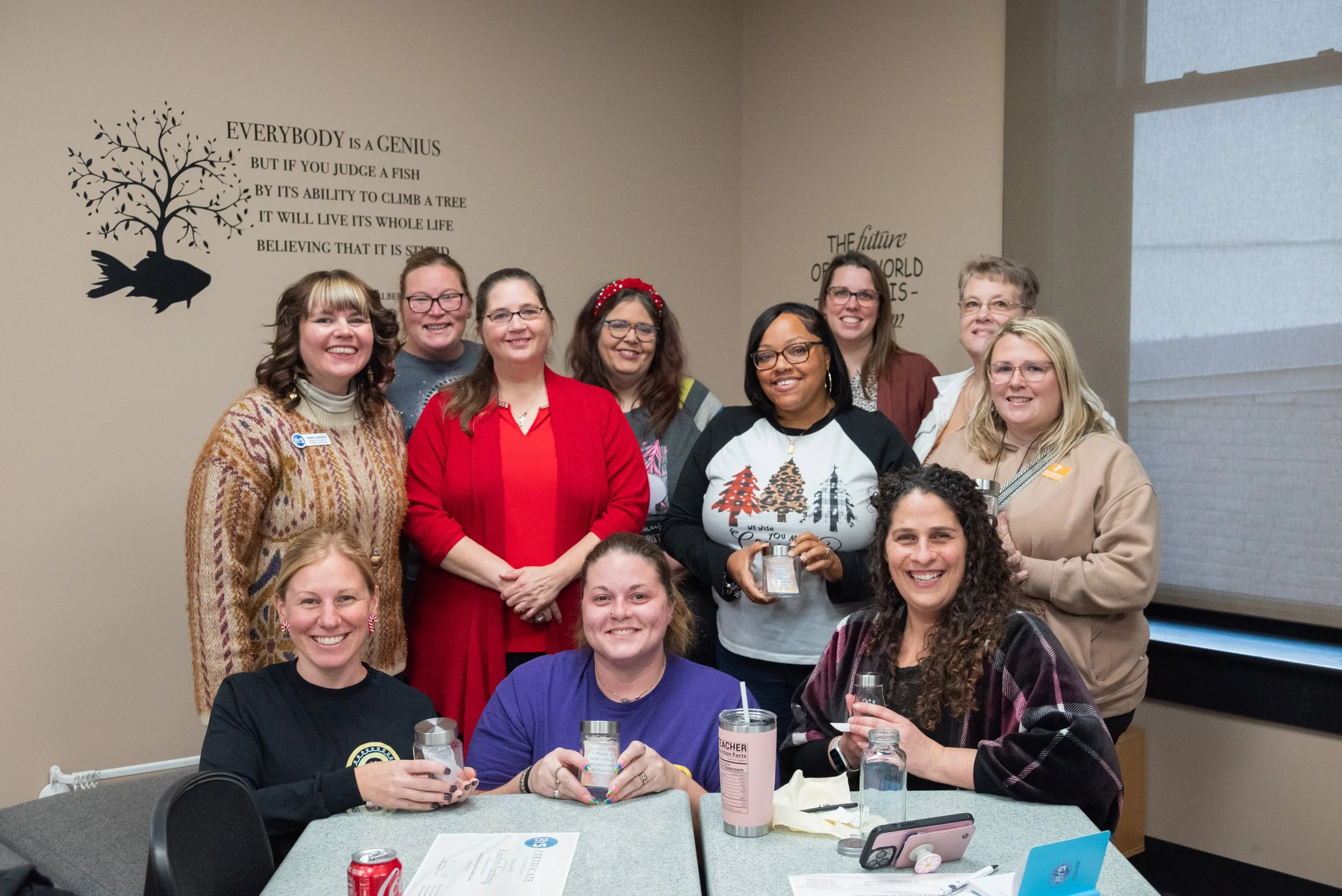
DETAILS:
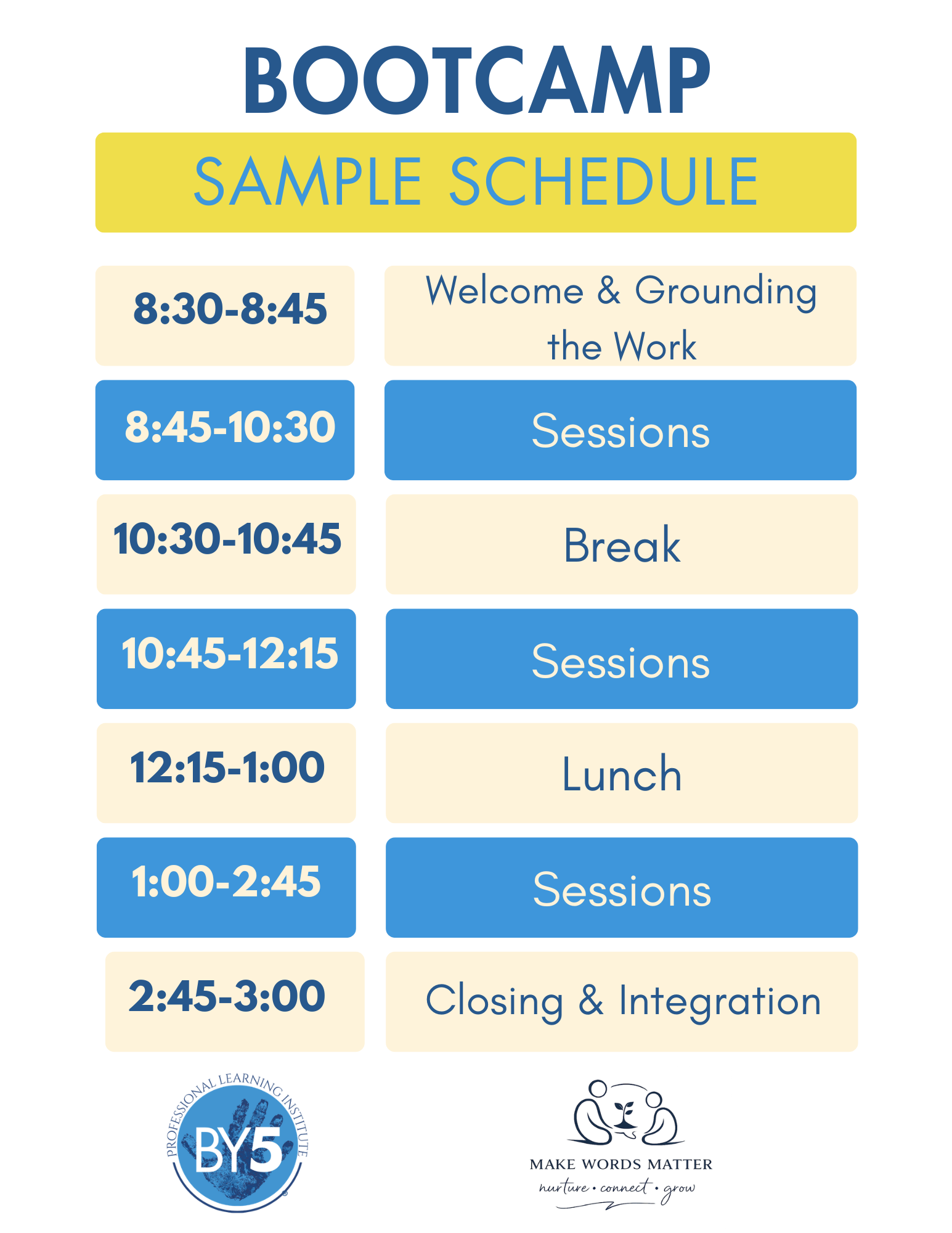
Dates/Times: July 21, 22, 23 from 8:30-3:00 pm
Location: Ivy Tech Fisher Building, 345 S High Street, Room 267
Open to Pre-K through 2nd grade educators
Breakfast and lunch provided every day
Fun giveaways and freebies!
SESSION BREAKDOWNS
Seeing Behavior Through a Trauma-Informed Lens
Behavior is communication—but not all behavior means the same thing. In early childhood settings, what looks like defiance, avoidance, or disruption is often a reflection of stress, lagging skills, or unmet needs. This session helps educators move beyond surface-level interpretations and instead ask, “What might be underneath this behavior?” Participants will explore how stress and early experiences impact development, and why behavior can look different across children—even in the same environment. Through real-life scenarios and guided reflection, educators will practice reframing behavior in ways that lead to more effective and compassionate responses. This session blends Developmentally Appropriate Practice (DAP) with a trauma-informed lens to support deeper understanding. When we change how we see behavior, we change how we respond to it.
Regulation Before Instruction: Why Kids Can’t Learn When They’re Dysregulated
We often expect children to listen, follow directions, and engage in learning—but these skills depend on something deeper: regulation. This session explores the connection between a child’s nervous system and their ability to access instruction. Participants will learn why traditional behavior strategies sometimes fall flat, especially for children experiencing high levels of stress. We will examine how to align expectations, tone, and timing with what children are capable of in the moment. Educators will walk away with practical strategies to increase cooperation by supporting regulation first, rather than demanding compliance. By combining principles of Effective Instruction Delivery (EID) with trauma-informed practice, this session offers a powerful shift in how we approach teaching. When children feel regulated, they are far more available to learn.
Adult Regulation & Classroom Choreography: Creating Consistency Between Adults
Children rely on the adults around them to create a sense of safety and predictability—and that starts with how adults work together. This session focuses on the often-overlooked role of adult regulation and co-teacher consistency in shaping classroom behavior. Participants will explore how differences in tone, expectations, and responses between adults can unintentionally increase stress for children. Using the concept of “classroom choreography,” we will examine how aligned communication and shared approaches create a more regulated learning environment. This session also introduces simple strategies for navigating tension between co-teachers in real time, without escalating stress. Through reflection and practical tools, educators will learn how to support one another while staying grounded in the moment. When adults are regulated and aligned, classrooms run more smoothly—for everyone.
Hard Conversations, Safe Relationships: Trauma-Informed Family Communication
Conversations with families are some of the most important—and most challenging—moments in early childhood education. This session helps educators approach these conversations through a trauma-informed, relationship-centered lens. Participants will explore why families may respond with defensiveness, withdrawal, or frustration, especially when discussing sensitive topics. We will focus on practical language shifts that reduce tension and build trust, even when the message is difficult to share. Educators will learn how to balance honesty with empathy while maintaining professionalism and clarity. Through role-play and real-world examples, participants will gain confidence in navigating these conversations with care. Strong family partnerships begin with communication that makes people feel seen, not judged.
Connection as Prevention: Building Safety Before Behavior Escalates
One of the most effective ways to reduce challenging behavior is to focus on connection before problems arise. This session explores how small, intentional moments of connection can create a foundation of safety that supports better behavior throughout the day. Participants will learn how “pairing” goes beyond simple rapport-building and instead communicates to children that they are seen, valued, and understood. We will examine how predictable, positive interactions can decrease power struggles and increase cooperation. Educators will leave with simple, realistic strategies they can use immediately—even in busy classroom environments. This session emphasizes that connection is not an extra—it is essential. When children feel safe with us, they are more willing to engage, listen, and learn.
Responding to Big Behavior Without Escalating It
In moments of big behavior, it’s easy for adults to become overwhelmed, reactive, or unsure of what to do next. This session focuses on how to respond in ways that reduce escalation rather than intensify it. Participants will explore the interaction between adult and child stress responses, and how quickly situations can spiral when both are dysregulated. We will identify common escalation triggers and examine what tends to make behavior worse, even when intentions are good. Educators will learn how to stay calm, set clear boundaries, and respond with confidence in high-stress moments. Practical tools and language strategies will be shared to support real-time decision-making. When adults stay grounded, they become the steady presence children need most.
You Can’t Pour From an Empty Nervous System: Educator Stress & Regulation
Early childhood educators give so much of themselves each day—but without support, that constant output can lead to burnout and emotional exhaustion. This session acknowledges the real stress educators experience and offers a practical, non-judgmental approach to managing it. Participants will explore how their own nervous system impacts their reactions, communication, and relationships in the classroom. Rather than adding more to their plate, this session focuses on small, realistic shifts that can make a meaningful difference. Educators will learn how to recognize signs of dysregulation in themselves and apply simple strategies to regain a sense of steadiness. This is not about perfection—it’s about sustainability. When educators feel more regulated, everything else in the classroom becomes more manageable
Speaker Bio

Dr. Beth Trammell is a licensed psychologist, author, speaker, and national consultant specializing in communication, relationship-building, and restorative practices in early childhood settings. She serves as an Associate Professor of Psychology at Indiana University East and is the Director of the university’s Master of Mental Health Counseling program. In addition to her academic and clinical work, Dr. Trammell provides mental health consultation to Head Start programs and early childhood centers across the country, supporting educators, leaders, and families in navigating complex relational and behavioral challenges.
Known for a presentation style that is real, thoughtful, and engaging, Dr. Trammell combines warmth, humor, and practical insight to create learning spaces where participants feel both challenged and supported.
Dr. Trammell’s work centers on helping adults talk about hard things with clarity, compassion, and cultural responsiveness—whether with parents, teaching teams, or leadership staff. Her approach is grounded in the belief that the words adults use shape children’s experiences, family partnerships, and organizational culture. Through her “Make Words Matter” framework, she blends psychological science, trauma-informed care, and real-world application to illuminate everyday bias and offer practical strategies for building trust, accountability, and connection.
With extensive experience in clinical practice, higher education, and early childhood consultation, Dr. Trammell is known for translating research into accessible, actionable tools that honor both policy requirements and human relationships. Her trainings emphasize reflective practice, restorative leadership, and strength-based communication that supports child well-being, staff resilience, and meaningful family engagement.