When people think about preparing children for school, they often picture flashcards, alphabet songs, and early literacy activities.
But one of the strongest predictors of a child's future success is something much simpler:
A conversation.
Not a lecture. Not a worksheet.
A conversation.
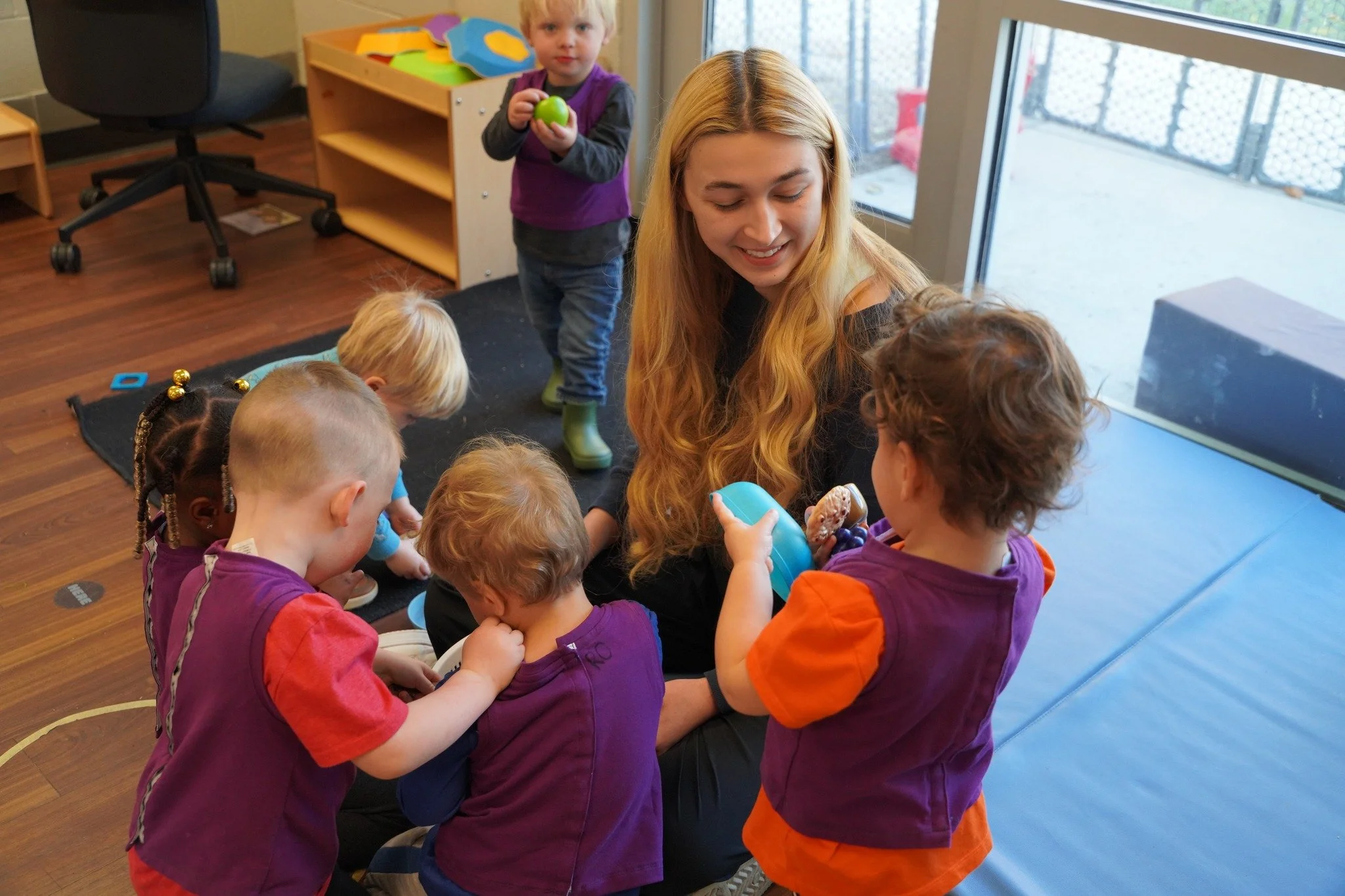
The simple back-and-forth exchanges between children and caring adults (what researchers call "serve-and-return interactions") help build language skills, strengthen brain development, support social-emotional growth, and lay the foundation for future learning.
Why BY5 Invested in LENA Grow
That is why this past year BY5 invested in bringing the LENA Grow program to childcare providers across Delaware County. LENA Grow is a no-cost, five-week coaching program that uses LENA's "talk pedometer" technology to help educators measure and strengthen the quality of conversations in their classrooms. The results tell an important story—not just about children, but about the educators who support them every day.
In its first year, LENA Grow reached 182 children across 25 classrooms and seven childcare programs. Thirty-six educators participated in a five-week coaching cycle focused on increasing meaningful interactions with children.
The Results Speak for Themselves
The outcomes were remarkable.
Children who started in the bottom third of their classrooms for conversational interactions increased their engagement with teachers by 42 percent. Children who began below the national average of 15 conversational turns per hour increased those interactions by 55 percent.
The growth we observed is encouraging because language development is about much more than words. Researchers Ruby Takanishi and Kimber Bogard found that "cognitive advances, social competence, and self-regulation are all related to learning outcomes." Every conversational turn represents an opportunity for a child to build confidence, strengthen relationships, develop communication skills, and practice the skills that support future success.
Investing in Educators Changes Outcomes
But perhaps the most important statistic was not about children at all.
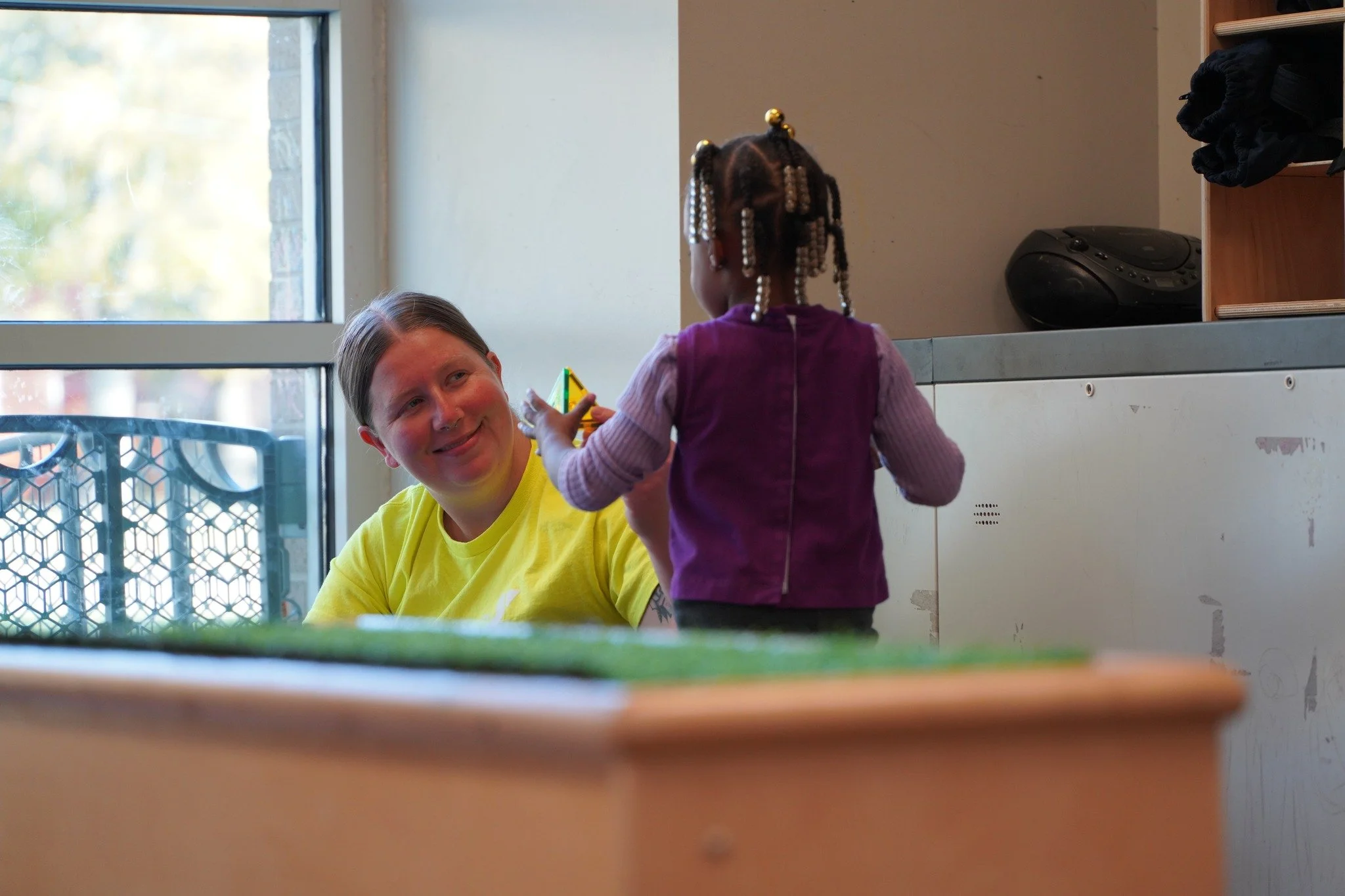
Ninety-seven percent of participating teachers reported feeling more confident in their teaching abilities after completing the program. Every participating teacher said they would recommend the program to a colleague.
That matters because decades of research have shown that effective early childhood programs are not defined by buildings, lesson plans, or checklists alone. They are defined by relationships.
Researchers have found that high-quality teacher-child interactions are among the strongest predictors of children's academic, social, and behavioral outcomes. As researcher Bridget Hamre explains, "providing sensitive and cognitively stimulating interactions for children requires a deep knowledge of children's development and interactional strategies."
In other words, these interactions are not accidental.
They are professional practice.
They are skills that can be strengthened through coaching, reflection, and ongoing support.
Too often, public conversations about childcare focus on regulations, ratios, and compliance. While those issues matter, they can overshadow a more important truth:
Quality begins with the workforce.
When we invest in educators, children benefit.
A Child Finds His Voice
One Delaware County teacher saw this firsthand. From the beginning of LENA Grow, she was committed to the coaching process. She had a young student whose limited communication skills often resulted in frustration, hitting, pinching, and other challenging behaviors. Rather than viewing the behavior as simply a discipline issue, she intentionally focused on increasing one-on-one interactions with him.
At the start of the program, he averaged just 10 conversational turns per hour. By the end of the five-week sequence, that number had climbed to 31 turns per hour. More importantly, he began making more attempts to communicate verbally and started repeating new words.
He wasn't simply becoming more compliant.
He was finding his voice.
Making Space for Every Child to Be Heard
Another teacher was convinced she knew which children in her classroom were the quietest. But when she received her first LENA report, she was surprised by just how little one child was participating in conversations.
"I knew she was quiet," the teacher said. "I didn't realize she was THAT quiet."
The teacher made a conscious effort to engage the child during moments when she felt most comfortable. At the beginning of the program, the child averaged just three conversational turns per hour. By the end, she averaged twelve.
The child had always been capable.
She simply needed someone to make space for her voice to be heard.
The Bigger Lesson
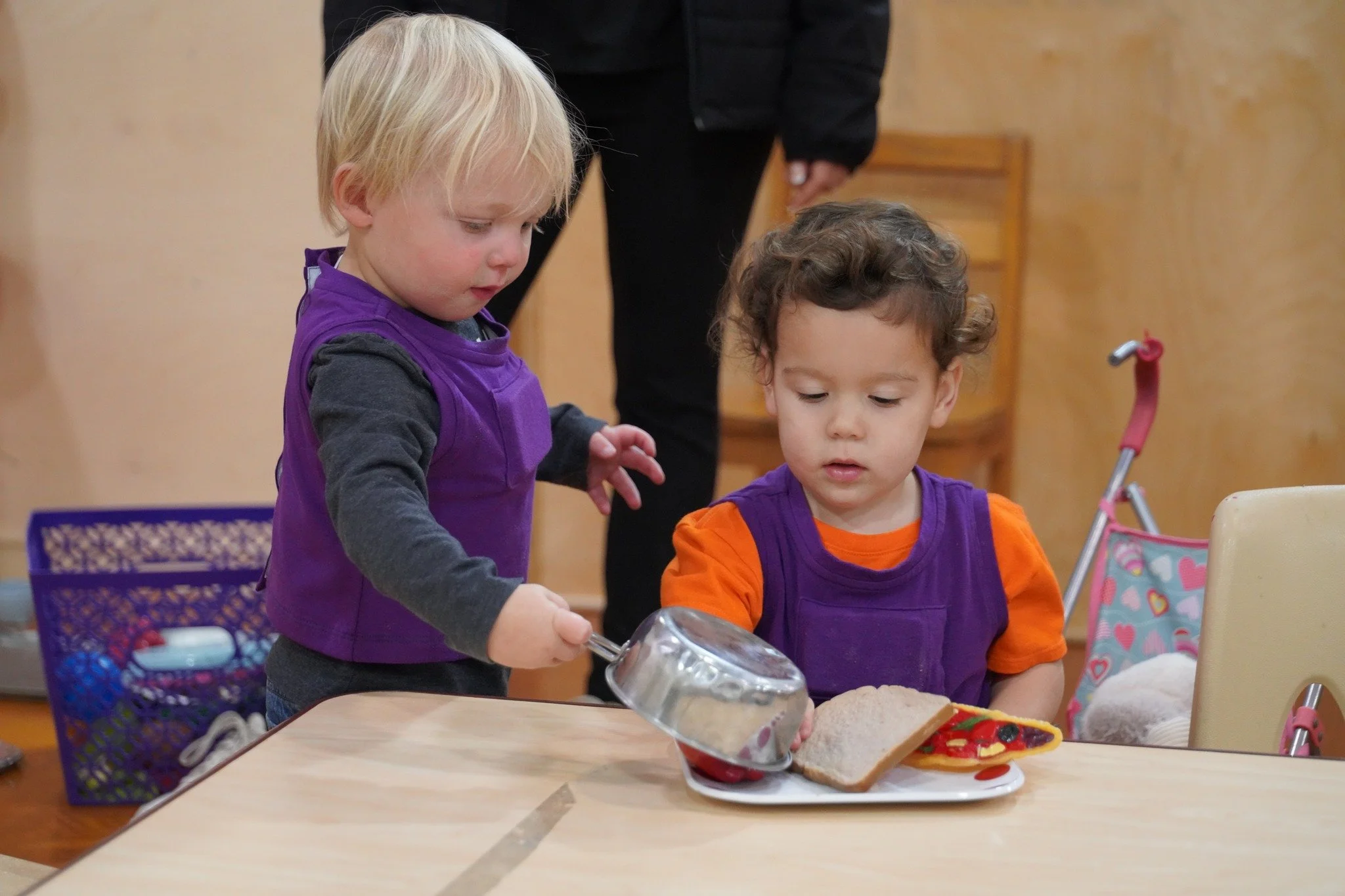
These stories illustrate something larger than the success of a single program. They demonstrate what can happen when educators are given the tools, coaching, and support needed to strengthen their practice.
At a time when many states are debating how much preparation and support early childhood educators need, it is worth noting that researchers have long observed that "there is, in general, a low level of pre-service qualification required for licensure or certification in early childhood." Rather than lowering expectations for the workforce, evidence suggests we should be investing in professional development, coaching, mentoring, and systems that help educators continuously grow.
The success of LENA Grow in Delaware County was not the result of a new worksheet, a new assessment, or a new piece of technology.
It was the result of educators learning new strategies, reflecting on their practice, and intentionally changing the way they interacted with children.
Research consistently points to the same conclusion: children thrive when they have access to skilled educators who engage them in meaningful, responsive interactions.
A Conversation Can Change a Future
The success of LENA Grow reminds us that when we invest in teachers, we invest in children.
Every child deserves meaningful conversations with caring adults.
Every educator deserves access to coaching, support, and professional growth.
And every community benefits when we invest in both.
Because sometimes the most powerful thing we can do for a child's future starts with something as simple as a conversation.